9 Tips for Outdoor Pizza Oven Beginners

Cooking in an outdoor pizza oven is a different sport than cooking indoors. Your home oven tops out around 550°F. A Fontana oven hits 900°F. There is a learning curve that requires patience and practice to develop your pizza cooking skills. It may be stuck dough or it may be a timing issue. Relax, these things are absolutely normal to experience as a beginner. The good news is that almost every rookie issue comes down to a handful of fixable habits and we are here to help.
If you're new to live fire or high heat cooking, these nine tips will save you the trial-and-error phase. They apply whether you're running a wood-fired oven, a gas oven, or a hybrid oven that lets you decide between the two.
1. Do All Your Prep Before the Fire Gets Going
Pizzas cook in 60 to 90 seconds in a properly heated Fontana. Once you launch a pie, you do not have time to grate cheese or hunt for oregano. Mise en place isn't a chef-y flourish here — it's the difference between a golden pizza and a charred one.
Set up a staging station near the oven with everything in reach:
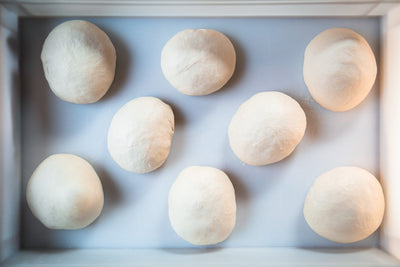
• Shaped dough balls at room temperature
• Sauce in a bowl with a ladle already in it
• Grated cheese in a container with a lid to keep it cold
• Toppings pre-sliced, pre-cooked if needed (raw sausage and thick vegetables won't cook through in 90 seconds)
• Flour, semolina, and peel within arm's reach
• A metal turning peel and a landing surface or cutting board ready
A good rule: if you find yourself scrambling for ingredients or tools after you start your pizza, give yourself more time for prep next time.
2. Preheat the Stone, Not Just the Oven
This is the single biggest mistake new pizza oven owners make. The air inside the oven heats up fast. The cooking stone takes much longer. You need both.
A cold stone gives you soggy, pale, underdone crusts even when the oven reads 800°F. A properly heated stone is what gives you leoparding, crisp bottoms, and the lift you're looking for.
Preheat times by fuel type: A Fontana gas oven reaches launch temperature in roughly 30 minutes. A wood-fired oven needs 45 to 60 minutes
Signs your oven is not ready yet:
• Dough sticks to the stone even with flour or semolina
• The bottom of the crust stays pale after 90 seconds
• The top cooks before the bottom sets
• You see steam coming off the dough instead of browning
If any of these happen, pull the pizza, give the oven another 10 minutes, and try again.
3. Let Your Dough Come to Room Temperature
Cold dough tears, resists stretching, and bakes unevenly. Take your dough balls out of the fridge 60 to 90 minutes before you plan to cook and leave them covered on the counter.
If your dough is frozen, move it to the fridge the day before and let it thaw slowly, then bring it to room temperature the day of. A full cold-to-room-temp rush on the counter takes closer to 2 hours and can leave the outside warm while the core stays cold.
Can dough get too warm? Yes. In a hot kitchen or on a summer day, dough left out for 3+ hours starts to over-proof. It gets sticky, loses structure, and deflates when you try to stretch it. If your dough feels slack and wet, refrigerate it for 20 to 30 minutes to firm it back up.
4. Flour the Dough Well (But Not Too Well)
Flour is what keeps dough from sticking to your hands, your counter, and your peel. Dust the work surface lightly, flour your hands, and keep a small bowl of flour close.
Which flour? For shaping, use AP or “00" flour you made the dough with. Avoid whole wheat and coarse flours for dusting — they burn at pizza oven temperatures and leave bitter flecks on the crust.
Too much flour is a real thing. A thick flour layer doesn't hydrate, so it sits on the dough as a dry coating that ends up scorched and chalky on the finished pizza. If you over-flour, brush the excess off with your hand or a pastry brush before topping.
5. Use Semolina or Cornmeal on the Peel
Flour alone will eventually glue itself to wet dough. Semolina and cornmeal act like tiny ball bearings that let the dough slide off the peel cleanly.
How to apply it: dust the peel lightly, then build the pizza on it. Don't let the dough sit on the peel longer than 60 to 90 seconds before launching — any longer and moisture from the sauce will start to seep through and stick.
Semolina vs. cornmeal: Semolina is the Italian standard and leaves a cleaner crust. Cornmeal is easier to find and has a slightly sweeter, nuttier flavor on the bottom of the pizza. Both work. If you're out of both, rice flour is a solid backup. Regular flour alone is the weakest option.
6. Temp the Stone, Not Just the Oven

A probe thermometer reads air temperature. What you care about is the surface temperature of your stone whether it be Saputo or the standard oven stones.
Use an infrared (IR) thermometer. Point it at the center of the stone where you plan to launch and take a reading.
Target stone temperatures by style:
• Neapolitan pizza: 800–900°F stone, 90-second cook
• New York style: 650–700°F stone, 4–6 minute cook
• Detroit or pan pizza: 550–600°F stone, 10–12 minute cook
• Roasting and baking: 450–550°F stone, varies by dish
The temperature you choose will result in a softer or crunchier crust, lower temperatures are usually crunchier with softer, Neapolitan style crusts at higher temperatures. Play around with different temps to figure out what works best for you.
Fontana tip: Because Fontana ovens include built-in dampers, you have real control over how aggressive the fire is. Crack the damper to build heat fast when cooking with fire; close it down to hold temperature steady for longer bakes and roasts. When cooking with gas, the damper is a good tool to use to shut for ten-minute periods of time in between cooks to get stones extra hot if they’ve cooled down from frequent pizza making. This is heat management, not just heat generation — and it's one of the biggest reasons Fontana handles far more than pizza.
7. Launch with Confidence
The launch is where most first pizzas fail. Hesitating on the peel is what makes dough stick.
The motion: hold the peel at a shallow angle, with the front edge just inside the oven mouth and resting lightly on the stone. In one smooth motion, pull the peel back toward you while the pizza slides off the front. Think of it like pulling a tablecloth out from under a place setting.
Load toward the front of the oven for your first few pizzas. The front is easier to see, easier to reach, and easier to turn. As you get comfortable, you can launch closer to the fire for more aggressive cooking.
What if the dough sticks to the peel? Don't force it. Gently lift the stuck edge, sprinkle a little semolina underneath, and jiggle the peel to loosen the rest. If it's truly welded, re-build the pizza on a fresh, floured peel. Pizza oven purists won't admit this, but every single one of us has had to do it.
8. Rotate Every 20 to 30 Seconds
Wood-fired and gas ovens cook unevenly by design — the side closest to the flame cooks faster. Rotating the pizza a third to a half turn every 20 to 30 seconds keeps it cooking evenly.
Use a round turning peel (a perforated one is better — it lets flour and semolina drop through instead of burning on the stone). Slide it under the pizza, lift just slightly, rotate, and set it back down.
Visual cues that it's time to turn:
• The crown (the raised edge) starts browning on the flame-facing side
• The cheese begins to bubble on one side but not the other
• You see a slight char line forming on the edge nearest the flame
If the bottom sticks slightly to the stone: Slide the turning peel underneath with a firm, quick motion. A confident push gets under the crust; a tentative one just pushes the pizza around. If you feel resistance, the stone may not be hot enough (see Tip 2).
9. Keep Cooking After the Pizza Is Done
This is where new Fontana owners discover what the oven is actually capable of. A pizza oven isn't just a pizza oven — it's the most versatile outdoor cooking surface you own.
Once the fire dies down from launch temperature, you've got a 600°F oven sitting there, ready for:
• Whole roasted chicken (425°F, about 45 minutes)
• Slow-roasted pork shoulder (300°F, 4–5 hours with the damper cracked)
• Focaccia, flatbreads, and naan
• Roasted vegetables with real char and smoke
• Seared steaks on a cast-iron pan
• Wood-fired desserts like cobblers, baked figs, and skillet brownies
If you own a Volta, the smart oven handles this gracefully. Set a temperature, drop in the probe, and the app tells you when your roast hits internal temp. You don't have to babysit the fire.
Frequently Asked Questions
Why is my pizza sticking to the peel?
Your dough is sitting on the peel too long, or you're not using enough semolina or cornmeal. Build the pizza quickly (under 90 seconds on the peel), dust the peel with semolina before shaping, and give the peel a gentle shake before launch. If it doesn't slide freely, lift the edge and add more semolina underneath.
Why is the top of my pizza burnt but the bottom is raw?
Your stone isn't hot enough. The air in the oven heated up fast, but the cooking surface needs more time to absorb heat. Preheat 10–20 minutes longer and use an infrared thermometer to confirm the stone reads at least 700°F. In a Fontana, you can also crack the damper to pull more heat downward into the stone.
How do I know when my pizza stone needs to be cleaned?
Fontana's Saputo stones are designed to self-clean at high temperatures — heat burns off most residue. If you see stuck-on cheese, burnt flour, or dark spots that don't clear after a full heat cycle, run the oven at 700°F for 20 minutes, let it cool completely, then brush with a natural-bristle brush. Never use soap or water on a pizza stone.
What else can I cook besides pizza?
Almost anything. Fontana ovens roast vegetables, bake bread, sear steaks, slow-cook meats, and bake desserts. The built-in damper lets you control temperature from 900°F down to 300°F. Most owners use their oven for full meals, not just pizza night. The Volta smart oven expands this further with app-controlled temperature and digital probes.
Can I use store-bought dough?
Yes. Store-bought dough works well in a pizza oven, especially from a local pizzeria or a refrigerated brand. Bring it to room temperature for at least an hour before shaping and stretch by hand rather than rolling. Avoid pre-rolled pizza crusts — they're too thin and too dry for high-heat cooking.
About Fontana Forni Outdoor Ovens
Fontana Forni has been building outdoor ovens in Italy since 1946. Every oven is designed and manufactured in Italy, with craftsmanship that reflects generations of family ownership.
What sets Fontana apart:
• Hybrid gas + wood capability in a single oven — no compromise between convenience and flavor
• Handmade Saputo cooking stones, produced in limited quantities.
• Built-in dampers for real heat control, not just maximum temperature
• Heavily insulated bodies that keep exteriors cool to the touch — safer around kids, pets, and outdoor furniture
• Smart technology in the Volta line, with app-based control and digital temperature probes
• Modular outdoor kitchen integration through the Elysia line
Fontana is built for cooks who want a full culinary tool outdoors — not just a pizza oven, but a serious piece of equipment that handles pizza night, Sunday roasts, holiday dinners, and everything in between.
Ready to Start Cooking?
Browse the full collection of Fontana outdoor pizza ovens — gas, wood-fired, hybrid, and smart — and find the oven that fits your space, your fuel preference, and the way you like to cook.
You'll also want to check out our accessories collection: peels, IR thermometers, turning peels, and covers built specifically for Fontana ovens. The right tools make all nine of these tips easier to execute.